THAILAND
The morning air in Bangkok is heavy and electric, alive with the crackle of neon and the scent of crushed ginger. From our base in Chinatown, the city feels gloriously untamed, a labyrinth of narrow alleyways where gold shops gleam under decades of soot and steam rises from immense, hissing woks. We spend our first days with no goal other than to absorb the friction of the streets, navigating the sensory blur on foot and allowing our internal clocks to slow to a deliberate, mindful rhythm.
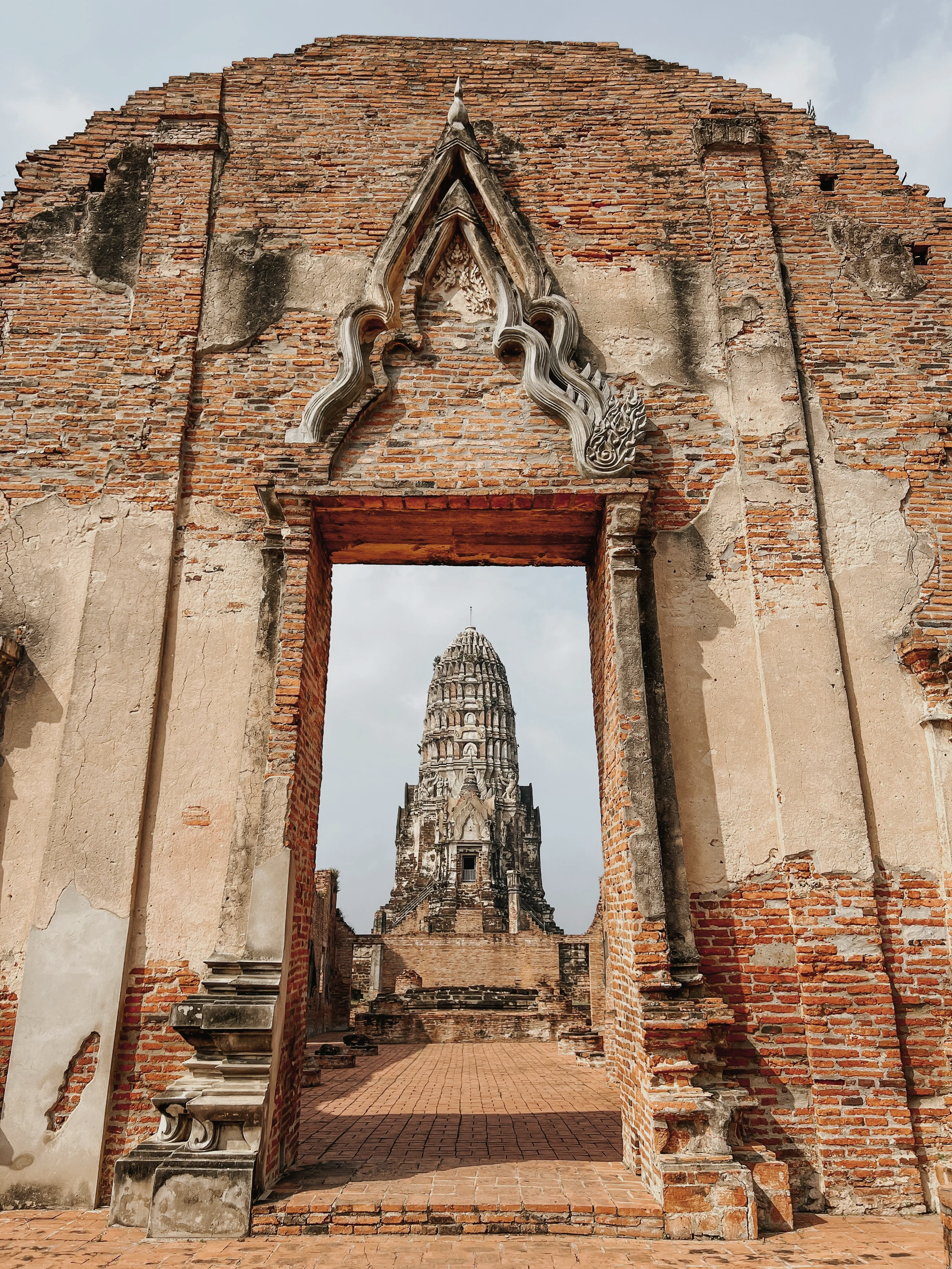
Leaving the capital behind, our journey transforms into a northward pilgrimage through the ancient spines of the country. Traveling at an unhurried pace, we drop first into the sun-baked brick complexes of Ayutthaya, where ancient stupas rise like quiet mountains out of the jungle floor. Days later, we push deeper into Sukhothai, losing ourselves among the sprawling, stone ruins of the kingdom's cradle. Here, the true luxury of slow travel reveals itself. While day-trippers rush past with cameras blinking, Ian and I choose to linger, watching the afternoon sun slip quietly behind a colossal, seated stone Buddha, casting a long, silent shadow over the reflective lotus ponds below.
Our northern trajectory culminates in the mist-shrouded peaks of Chiang Mai. The frantic energy of the lowlands dissolves into the cool, mountain air and the gentle chime of temple bells echoing from the hillsides. Settling into our neighborhood, our days shift into a peaceful, neighborhood rhythm. We spend hours exploring the ancient, walled city, ducking into quiet wooden temples, and sitting at low tables over steaming bowls of rich, coconut-curry broth. It is a journey built on transitions, a seamless thread running from the neon-lit chaos of the capital’s oldest streets to the serene solitude of the northern mountains, proving once again that the world is best experienced when you give it the time to unfold.